Barcombe
.jpg?mode=max&format=jpg&quality=85)
Just up from Lewes, Barcombe is a side packed full of local firefighters and is debatably one of the most friendly fixtures of the season. There is a total understanding of our style of cricket – everyone must get a go (both on the pitch and off it). Needless to say, their enthusiasm for the golf ball game in The Royal Oak afterwards is not matched by any other opponent!
Fondly remembered for the Barcombe Panel Beaters game (read the 2010 match report), a word to the wise - it’s probably best to park your car a good distance from the ground, particularly if Ninian’s bowling!
Washouts here have resulted in equally competitive games of indoor bar skittles.
The venue for the only two occasions of a century and a five-for for the RNVR,
Barnes

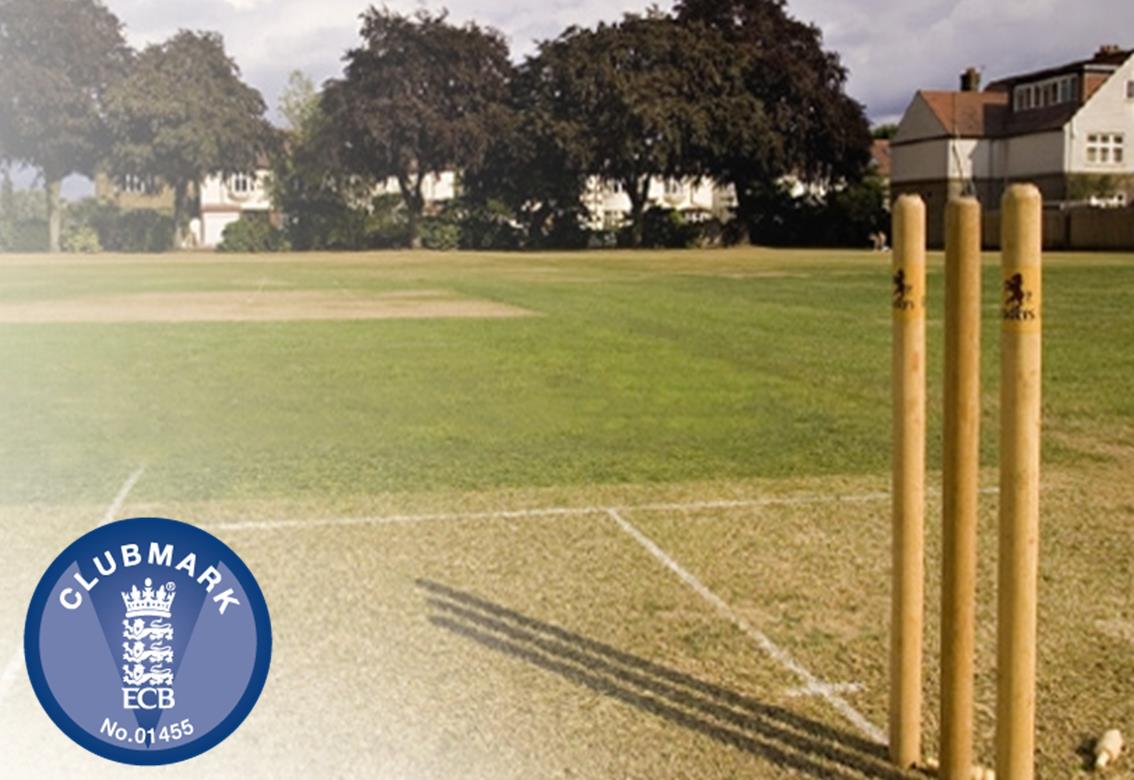
As close to a rural setting you'll find in London. Barnes have been hosting us for over 25 years and many RNVR have played league cricket here over the years and many still do. The fixture was created by the late Ian Fleming who had played for the club as a friend of Dr Alan Simpson in the 1980s and when the Apothecaries and Artists started to re-tour Cambridge it was under IF's leadership with players drawn from these two clubs and others. An annual fixture was born.
Bromley Common


Bromley Common is a new fixture for 2023
Since its formation in 1889, and to the present day, the club has played cricket at 'The Grove'.
The earliest recorded match played on Bromley Common dates back to 30th July 1735 played between a Kent side and London Cricket Club. Kent won by 10 wickets after scoring 97 and 9-0 in reply to London's 73 and 32. The report of this match states that “A large crowd attended and a great deal of mischief was done. It seems that horses panicked and riders were thrown, while some members of the crowd were stamped over. One man was carried off for dead as HRH passed by at the entrance to the Common”. HRH at the time was Frederick, Prince of Wales, first in line to the Throne of England. Unfortunately he died, some say after being hit by a cricket ball, before he could be crowned King. He was a keen patron of cricket, and attended many matches.
Bromley Common was used for major cricket matches on at least a dozen occasions between 1735 and 1752. Kent played seven matches, four of which were against 'All England' sides. The last major match known to have been played was on 30th June 1752. In 1748 a famous single-wicket match also took place between two of the best players in the country: Mr Mills, a Bromley bookmaker and Kent player, and T.Faulkener of London.
Bromley Common’s early cricket ground is believed to have been in the area of Brick-Kiln Lane (now Holmesdale Road), where a connection can be made with the local game and the Norman family. George Warde Norman (1793 to 1882) mentioned in his memoirs that he played there. He was a member of a family which had extensive lands around the south of Bromley, including Bromley Common. The Norman family name is continued locally, with a large local park being named after the family.
Following the Napoleonic War, and Napoleon’s defeat in Russia in 1812, cricket began a revival in England. A new ground was established on Princes Plain, Bromley Common, under the name of Princes Plain Cricket Club. The club’s first treasurer was George Warde Norman, who also played for Eton. He worked abroad between 1817 and 1824, and took up cricket again when he returned, winning a place in the Kent side which he kept until well into his forties. The infamous Enclosure Act of 1821 prevented cricket from being played at Princes Plain, and the club moved to Chislehurst, changing its name to West Kent Cricket Club.
Chertsey
Chertsey was a new fixture in 2022
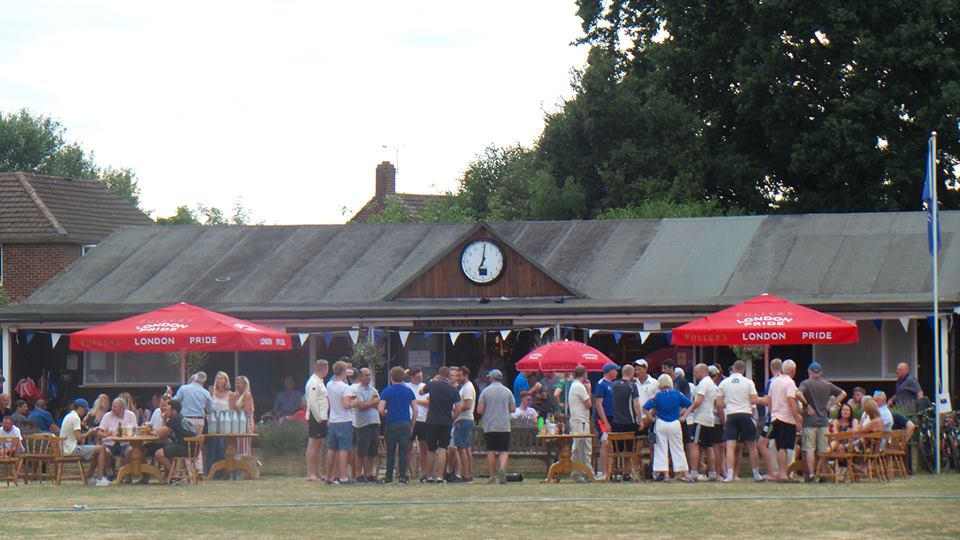
The History of Chertsey Cricket Club
The Beginning
The first big date in CCC's timeline was in 1737, with the foundation of the Club and the first mention of cricket being played in Chertsey, when we took on a London side (losing - good start),but the future was bright with the backing of the 4th Earl of Tankerville, Charles Bennett, who's infatuation with cricket not only sustained CCC, but kept him in the Chertsey XI from 1773 to 1781 as a handy batsman.
It was great thanks to the Earl for the introduction of a one legendary Edward "Lumpy" Stevens. Born two years before CCC's beginnings in 1737, he is regarded as the first great bowler in the game's history and a master of his craft, starting his career around the 1750s in a time when the ball was bowled by throwing the ball the same way as in crown green bowls, along the ground. He also played through the period of the game's progression where "giving the ball air" and its variations were developed, which began around 1770, and is more recognised as the style we are most used to bowling now. The Earl employed Lumpy as his gardener, along with another well-known batsman, William Bedster, who went on the play for Middlesex.
It was during a match with Hambledon on 22nd - 23rd May 1775 that Lumpy beat batsman John Small three times by the ball going through the middle of the two stumps. Lumpy, as a typical precious bowler, was agreeably upset, and along with the other patrons at the game (we can only imagine during conversation at the bar post match, where most decisions are made) agreed this gap must be filled and a third stump introduced, and after a meeting with the great and the good, the rest they say is history. If you check out our current logo, this is reflected with the golden middle stump and the year of its introduction, 1776.
The above is the best to our knowledge, and we often have spats with clubs re the ownership of Lumpy (mostly with the keyboard warriors on Twitter) - but such was the pioneer he was and the clout he held he played for just about everyone, ending his career on 5th September 1789, so walk into most Surrey cricket clubs and they can tell you their own story about beloved old Lumpy, he has a lot to answer for.
Photo credit: The Laws of Cricket agreed in 1744 and published 1755, taken from the CCC Pavillion, below: Member Martin Allen makes an appearance on "Celebrity Antiques Road Trip" at the club
19th Century
During the early part of the 19th century the club continued to flourish, (the club even gained column space in the Sporting Life) but by the 1850s news started to become sporadic. One prominent and beloved figure of this period is Joseph Moir. First President of Chertsey Town Cricket Club (spoiler alert),mean slow bowler, and self-styled "General" of the Club. In the 1860s though our story starts to take a bleak turn. In 1860 membership was down, but the county of Surrey was deemed to be the best at producing gifted players, and Chertsey players had started to be sent to the County Eleven. The Club toasted themselves and gave themselves the nickname "The Surrey Club", with fixtures against players from actual The Surrey Club and All England Eleven players proposed in 1861. One player, a H.H. Stephenson, actually made it to the prestigious All England Eleven, in a group of 12 professional players headed on a tour of America. The Club did find themselves down on membership numbers however don't forget, and in 1862 the Club no longer appears in the newspapers of the day. By 1865 Chertsey Cricket Club was sadly defunct, seemingly in debt. It's not all doom and gloom though as after much talk a meeting was called on 22nd July 1865 and a new Club was proposed by a W. Croft, who "much regretted that there was no club at the present time in Chertsey, the old one being defunct; but he thought if a little new blood was infused into it with a few of the old ones it must succeed" and "believed every man who could afford a trifle would support it"*. He offered to chair and fund the club, with Joseph "The General" Moir as President, and the club was taken out of trust and handed back when the debts of £6 10s, 2 1/2d were cleared. Hurrah.
In 1885 a new club on the block sits down for their first annual general meeting - Gogmore Cricket Club (an early incarnation of the Gogmore Knights we like to hope). They became popular in membership, so much so that they started to eclipse Chertsey Town Cricket Club. in 1886 Chertsey Town Cricket Club offered Gogmore use of the dressing house, utensils, & cash, but Gogmore politely declined their offer. Chertsey Town Cricket Club started prosperously, with 50 members, was given use of a Mr H Hamilton's field, which was a handy three minutes from the train station, and it is also around this time we hear the first mention of a Major E.D. Stern, who gives us £1 to get us going and lets us have use of his Chertsey Rec ground to play our matches on. More from the Sterns later. The club was on a better footing this time around, and owned by a trust, consisting of three members, who owned the property and funds of the club. On 15th April 1893 they decreed at their annual general meeting the club colours should be yellow and navy blue, with a cap incorporating these colours was to be worn at all times during a match.
Back to Gogmore Cricket Club.
As mentioned previously, Gogmore Cricket Club sat down for their first annual dinner in early 1885, with around 40-50 attendees. Their first match was reported in June 1885, playing matches at a ground owned by E.T. Madeley, a wealthy household store owner. By 1887 they weren't doing very well results-wise, but were seen to be very social in attitude, frequenting the Kings Head for a post-match debrief, and putting their poor form down to a lack of practise and time other clubs had afforded to them. They decided the club was to be more of a social playing club, and wouldn't compete to win. By 1892 their AGM notes advise they still needed more practise and were looking for more members. They remained financially healthy, much in part due to membership doubling to over 100. By 1898 they'd finally got their ducks in a row, going from 12 matches to 42 by joining a league involving Weybridge, Chertsey, & district, and they voted to increase their number of out grounds to accommodate their growing membership, only playing at the best & prettiest grounds in the country.
Photo credit: Top - Gogmore Cricket Club team photo and names, match poster for game v Surbiton, 1853, newspaper cutting from 1893 showing club colours decided upon, Chertsey Town Cricket Club team photo 1891
*Surrey Advertiser July 22nd 1865
20th Century
We've learnt up to now CCC (in whichever incarnation) have had a history of having a pioneering attitude and moving into the 20th century this hadn't changed. In 1903 CCC as we know it was about to undergo somewhat of a transformation, with the merging of the more serious Chertsey Town Cricket Club and the social and popular Gogmore Cricket Club to make the club we know today. They also decided the club's colours would stay as yellow and navy blue, the colours we still use today (with the royal blue being gradually introduced as time passed). We also managed to upset the clergy - much to the chagrin of the local vicar and first CCC President E.R. Parr, Chertsey were one of the first sides to play on a Sunday. Sacrilege!
By 1909 the club was flourishing both financially and on the field, with the mid-week side deemed better than the Saturday side. There was much help provided by now Sir Edward Stern, a London banker, who gifted funds to open up a pavilion of sorts, and he was offered the Presidency again (he'd previously been a part of Chertsey Town Cricket Club) by way of a thank you.
The Edward Stern Sports Ground, our current home, was purchased by Sir Edward Stern, in 1921, and the following year the first pavilion was built at Grove Road. This remained until 1963 when the pavilion was replaced with what we know now. In previous centuries the club played at the Burway mainly until the mid-1850s, but also at Abbey Mead, now known as Abbey Field, Gogmore and Chertsey Rec (where we still play Colts and 3rd & 4th XI matches).
The write-up of the period of this point onwards to the present day is currently under construction, with the help of CCC members.
Photo credit: Newspaper clipping from The Surrey Times showing the amalgamation of Gogmore and Chertsey Town Cricket Clubs, 1903, Chertsey Cricket Club team photo from the 1910s, Chertsey Cricket Club photo from the 1920s, location of the ground in the 1920s (provided by Mick Wells),Chertsey team photo from 1931
Cuckfield
.jpg?mode=max&format=jpg&quality=85)
A Sussex Premiership ground with the backdrop of Cuckfield Park House and near Ockenden Manor takes some beating. We’ve been playing Cuckfield for over 70 years and this is an all day game, usually the final day of the Sussex tour. It is always fiercely competitive and a chance for us to try are hand out against their overseas professional – in recent years these have included Saeed Ajmal, Roston Chase, Jordan Silk and Jeet Ravel!
Not to mention the fact that our President Emeritus, Arthur Hensher has his ashes scattered under the tree in the outfield. A special ground and a special place.
Ditchling
.jpg?mode=max&format=jpg&quality=85)
Ditchling is an all day game par excellence, and marks the start of the Sussex tour. We always have a fabulous lunch here, and given that invariably we are inserted, unfortunately this doesn’t tend to be enjoyed entirely by all of our batsmen.
With our former captain, Paul Ford, now Chairman and Joined by Matthew Searle as President in 2023 we are always due a warm welcome.
Dr Ford still plays and exercises mind games, and as formidable game of cricket as any we face come in to play here. All the more joyful as we now play this game for the coveted HensherPepler North Star Plate, offered in celebration of the two Presidents setting the game up in a certain pub.
The wicket has now calmed down a bit, however in previous years the tennis ball bounce has had it likened to beach cricket. Perhaps it is the ashes of the late Peter Connolly helping us play well.
A post match BBQ, washed down with a pint of Harveys or Hairy Dog tops off a great tour opener.
Forest Green Forest Green was a fixture in the 1960's and David Thornton recalled a century there. Sadly an over enthusiastic tidy of the pavilion by the football club means those scorebooks can't be found now. Forest Green kindly invited us back for 2021 and have quickly made up for 50 years of not scoring any runs against us.

Headley Old Freemans
.jpg?mode=max&format=jpg&quality=85)
A long-standing club fixture, we’re always warmly welcomed by the Headley President, and past President of Surrey CCC,
Sir Michael Pickard.
The Club have expanded in recent years after a merger with a local school, who's injection of players and funds has been wonderful.
The short boundary on one side of this ground inevitably means that local knowledge here counts for a great deal. Also, as a successful and proud Surrey club this is always a hard fought match.
Post game sausages may have dried up in recent years, but Sir Michael and his pink gin are always good company when stumps are drawn.
Hit or Miss
.jpg?mode=max&format=jpg&quality=85)
The RNVR is the Hit or Miss’s oldest fixture since the club was reformed in the early 1970s. It’s a lovely ground, across the road from the pub and while it was surrounded by blackberry bushes, as many an outfielder could attest, these have been cut back now to improve the view from the pub garden.
We’ve always had entertaining games here and opponents have ranged from the actor, Robert Lindsay, to Tilly the captain’s daughter (just don’t mention her clean bowling Charlie…)!
Only the great Graham Wyles has come close to arriving or leaving in a helicopter, and purely for social, domestic or pleasure reasons.
Home Park CC, Eton College
.jpg?mode=max&format=jpg&quality=85)
Hosted and captained by top maths guru and recently retired housemaster, Dr Tex Warnes.
Tex has played with us on Sussex tour and is one of only a handful to have played against us for more than two sides (Barnes as well). Home Park is the Eton Masters XI, open to teachers, parents and with invited pupils too.
It’s a real treat to play from the old pavilion bearing the names of past elevens to play at Lords and against the likes of Richard Montgomery, now a chemistry teacher, proving testing for the bowlers (and the fielders when he decides to put up catches – we’ve just got to hold a few)!
If for nothing else, this fixture has got to be visited for the showers alone – the best by far on our circuit!
Hurstpierpoint
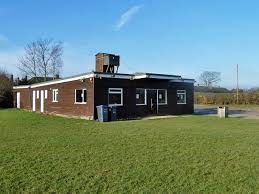
The RNVR started this fixture in the lovely village known to so many from Tour nights out, in 2021 when the attempt was made to have a week long Sussex Tour. Now it reverts to a stand alone Sunday fixture, served with excellent pubs and a welcoming clubhouse. Our host Matt Parsons works for Sussex CCC and is responsible for bringing on the young of the county. You can expect a youthful opposition, possibly bowling or batting in tandem with their fathers.
Leigh
.jpg?mode=max&format=jpg&quality=85)
For many years an all day fixture on the Sunday of the Wimbledon final, with the famed potatoes for lunch. But for a period before that in the 1980s Leigh and the RNVR had such a strong bond that we played twice a year. A more imaginative fixture program exists today.
A word of warning though, ensure that you set your sat nav to Leigh in Surrey, not Kent – a mistake that has been made on more than one occasion.
The Dolphin pub up the road in Betchworth is always a favourite for pre match refreshments. The pub next door was never open early enough for the old all-day fixture.
Lindfield
.jpg?mode=max&format=jpg&quality=85)
Lunch at the Bent Arms followed by cricket on the village green make the trip down to Sussex very worthwhile. The parkland is vast and is used by everyone to take a Sunday afternoon walk resulting in the largest crowd we are likely to see outside tour.
Lindfield have a strong club and often play very talented youth against us with fearsome results, but the spirit is wonderful.
Indeed only having the Funfare next to us is likely to spoil the utter tranquility, but even that makes us feel like modern day one-day pros!
Lindfield was one of the first clubs that we play to install a digital scoreboard, a few years on now I think we’ve just about mastered how to operate it!
Maori Oxshott
.jpg?mode=max&format=jpg&quality=85)
Nestled in the midst of the mock Tudor mansions that inevitably go hand in hand with the nearby Chelsea training ground at the old St George's hospital ground you find Maori Oxshott. The ground itself is flanked by tennis courts, a pétanque piste and an archery range.
Spin options we’ve faced in the past range from the excessive looped flight of Richard Hansom to the darts of former Surrey and England cricketer Keith Medlycott, off a zero pace run up, so a mixed bag. On the batting front the Shahid Afridi Boom Boom seems to be the weapon of choice. This should give you an accurate idea of the style of game that plays out here.
No one mentions how the RNVR sorted out a young Phil Salt as a teenager, at a certain cost to the bowlers....
Outwood
.jpg?mode=max&format=jpg&quality=85)
Nestled in a National Trust forest, grounds don’t get much more picturesque than Outwood. Some of their players have joined us on our Sussex tour, equally they have recommended overseas tour destinations for us too.
The popularity of this fixture has led us it to move from an afternoon to an all-day game. The quality of the lunch, which takes place on trestle tables on the outfield just in front of the season, makes the afternoon session all the more challenging, particularly post the cheese and port!
Oxted & Limpsfield
.jpg?mode=max&format=jpg&quality=85)
We mainly play on the primary pitch at Master Park which features in Brian Levison’s Remarkable Village Cricket Grounds, which describes it as having “a large square which boasts sixteen pitches” and regales stories of Gary Sobers batting for Oxted.
Piers is always quick to tell us, annually, that it’s the only ground that we play on where we can see a clock on a church tower – true village cricket; and he only does that because Arthur Hensher remembered that from RNVR games in the 1960s!
We must also mention that, in the past, we have also played at the equally attractive Limpsfield ground a couple of miles down the road at Grub Street.
Reigate Pilgrims
.jpg?mode=max&format=jpg&quality=85)
Positioned just behind the Red Lion pub in Betchworth, Reigate Pilgrims has been one of our more popular fixtures for 25 years. I’m sure that the fact that it’s an all-day game, involving port at lunch, has nothing to do with it!
RNVR players have joined the Pilgrims in the past for a tour to India and in return Pilgrims have turned out for us in Sussex and elsewhere.
Rottingdean
.jpg?mode=max&format=jpg&quality=85)
Monday morning on tour is greeted with the Brighton dip – a short (or not so short in Ed’s case) swim around the buoy. Lunch is then taken in The Plough before we head up to the infamous Rottingdean bowl.
Here again, local knowledge counts for a lot as both bowlers’ run ups are downhill and many an outfielder has been caught out by the slope.
What has traditionally been a slow and low wicket seems to have more even bounce in recent years.
The post match seafood supper at the Regency on the Brighton seafront has become a firm tour favourite.
South Nutfield
.jpg?mode=max&format=jpg&quality=85)
An interesting ground with rather short straight boundaries and long off and leg side ones – great if you hit in the ‘V’ not so good for those who like to cut and pull.
Bookended at one end with the railway line and the other a small field, this is another good Surrey village ground. The advent of a couple of all weather nets has meant a steady flow of junior cricketers coming through, so don’t be surprised if you see the odd attempted reverse sweep here! Indeed the club suffered its largest run defeat here in 2021. It had to happen somewhere!
In recent years the support for this fixture has become more vocal and often batsmen are accompanied by music stings on approach to/departure from the wicket.
St Albans
.jpg?mode=max&format=jpg&quality=85)
Clarence Park, the home of St Albans, has the most enormous pavilion we ever see and is undoubtedly the largest ground we play on. Modelled in the Victorian era on the Oval it is true delight. Only smaller now for the insertion of lot of tennis courts.
It is equally one of the few games that we play to the north of London.
The fixture came about through Steve Ferguson (Fergie) who we met playing in Cambridge for the Apothecaries & Artists and who was thence an ever present member of both our regular and tour sides while he still played league cricket for St Albans.
St Cross Symondians
.jpg?mode=max&format=jpg&quality=85)
A new fixture in 2021 when the Winchester tour was created, the ground is a beautiful short hop from the College ground along the St Cross Road.It has two enormous playing areas, back to back, and three pavilions. Wonderfully hospitable and the tour nature of the game brings added excitement to both sides.
Tom Hillman has had many of his finest hours here with both bat and ball - and we've only played twice.
Streatham & Marlborough
.jpg?mode=max&format=jpg&quality=85)
Another popular fixture as the short journey time to Dulwich inevitably appeals. The Streatham & Marlborough is just East from Dulwich College and Old Alleynes' grounds set back from the South Circular.
The hot and cold tea options here are always appreciated as they are unique, and the bar is large enough to always stock Guinness. Perhaps given the ease of location players often spend longer chatting after the match and a strong rapport has grown up. This is helped by mutual amusement analysing the host skipper's ball by ball field changes.
S&MCC is the only club we have played midweek outside of tour as they have a vibrant Wednesday side.
The Sunday Seconds
The Sunday Seconds are a very young club, recently formed of friends we had known at Rottingdean. Without aground they use the pitch of Staplefield cc, beautiful situated on the village green, and overlooked by two splendid pubs. One for lunch and one for the evening.
As their relationship has developed with their hosts they are now the Sunday side and Staplefield concentrate on the leagues and Saturdays. Played in the best tradition unlikely stars are born each year and there is a lot of laughter.


Winchester College
A lucky chance offered us a game at Winchester college in 2021 against the Staff XI. Having been fortunate enough to do a recce of the grounds available we eschewed the first eleven square, grandly named "Lords", for the beautiful second's pitch. Flanked on two sides by a flint wall and with a centuries old tree within the boundary line it is an astonishingly pretty ground, with a pleasing acoustic as the ball echos around the space, off the bat.
The tree is a pleasing target for big hitters, usually with disastrous effect.
The pavilion is ancient, easily the oldest we use, but as it was clearly designed for hobbits most lay their kit on the grass.
Stansted Park


Nestled between Chichester and Portsmouth and part of the South Downs National Park, Stansted Park is undoudtedly, one of the prettiest and most impressive grounds that we play on (https://www.stanstedpark.co.uk/). The cricket pitch is right in front of the rather magnificent stately home that once belonged to the Earl of Bessborough. It's a recent edition to our fixture card, and one that looks destined to become a firm favourite.